The Collective Voice: Conversations with Photographers
The famous Paris Review Interviews stand on their own as a literary form. Collected since the 1950s, interviewers would often spend days with their authors and bring alive their personalities on the page, offering a masterclass in art and life (sometimes what not to do!). While the famous interviews are generally of writers alone, their website does include interviews with photographers like Alec Soth, Gregory Crewdson, Todd Hido, and Moyra Davey. While there is no parallel in the photography world, I’ve found some wonderful collections and sources that approach their iconic style.
One collection I love is Conversations with Contemporary Photographers (Umbrage Editions, 2005). This volume also includes interviews with Alex Webb, Philip-Lorca diCorcia, and others. These interviews have great depth and have sent me looking for the artists here I’ve not known. I found this one while researching the work of Graciela Iturbide, whom I just briefly met at a book signing at the International Center for Photography. An excerpt I love from her interview:
Dreams have always been important to my work. I dream at night about what I’ve done during the day. I dream about things I’m going to do. I have premonitions. Brassaï has had a decisive influence on me...For a long time now a phrase of his has had a major impact on me: ‘Life cannot be captured by realism or naturalism, but only through dreams, symbols, or the imagination.’
I think the best interviews of any artist bring to fore that person's singular outlook on the world, along with how they see themselves in the continuum of other photographers, painters, writers and how that informs their work.
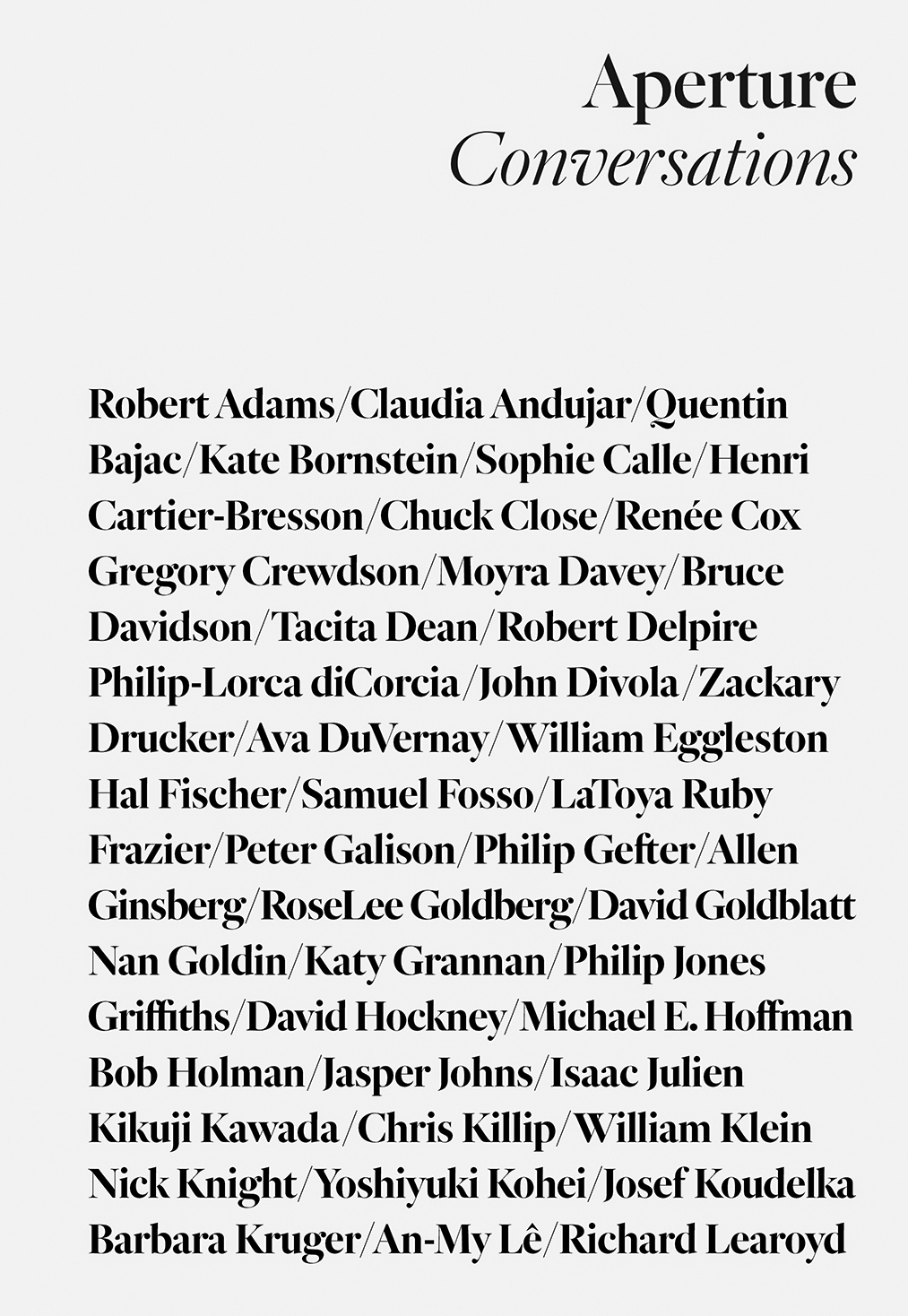
In 2018 Aperture collected over 560 pages of interviews primarily from their magazine for its 65th anniversary year. Aperture Conversations (Aperture, 2018) is a who’s who from the photography world, from Robert Adams and William Eggleston, to Nan Goldin and Jeff Wall, and adjacent artists like David Hockney and Jasper Johns.
Sally Mann's interview takes an epistolary (via fax!) form and is full of her characteristic wisdom and erudition (see also her most excellent recent memoir Art Work: On the Creative Life):
I still want to make a beautiful image…I've read a piece by Dave Hickey in which he applauds the subversive power of beauty. In this article Hickey argues for the use of beauty as a persuasive agent in conveying the artist's agenda. I find the more Ciceronian approach between agency and agenda far more appealing than the modernists distinction between form and content.
I have found tangible evidence that within this life's sweet tedium reside certain truths: that nothing attains maximum beauty until touched with decay, that the vulgar and miraculous can be one.
Aperture publishes many conversations on their website (n.b. Interviews) and Youtube channel:
Aperture Conversations
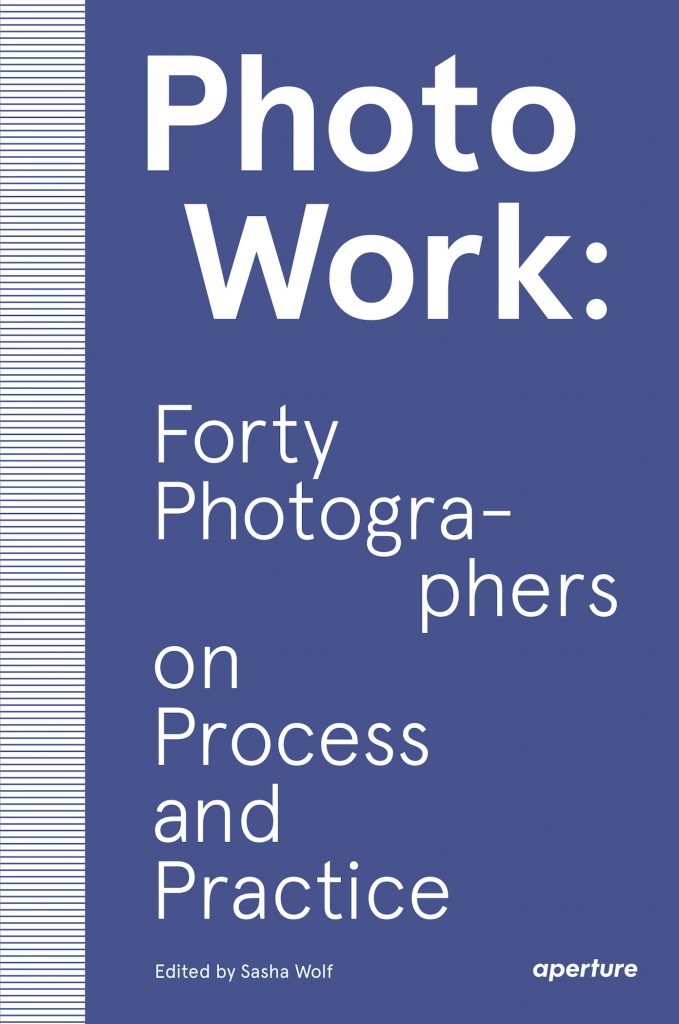
No list of interviews would be complete without Sasha Wolf's PhotoWork: Forty Photographers on Process and Practice (Aperture, 2019). Uniquely, this book poses the same set of questions to forty photographers, such as "Is the idea of a body of work important to you? How does it function in relation to making a great individual photograph?" and "What are the key elements that must be present for you when you are creating a body of work? (Social Commentary, strong form, personal connection, photographic reference…)"
To the latter question, I love Robert Adam's response:
All of those factors can be compelling, but mostly I need to love what I see (which may include, of course, objecting to its destruction). I think it was Simone Weil who said that paryer is complete attention. That's pretty close.
Wolf has taken the concept even further with the PhotoWork Podcast, counting over 100 episodes now, and it's one of the few photography-related podcasts I listen to.
The Louisiana Museum in Denmark operates a wonderful media arm under the name Louisiana Channel, which includes an entire playlist of interviews with photographers, including, recently, Ed Templeton, Stephen Shore, and An-My Lê.
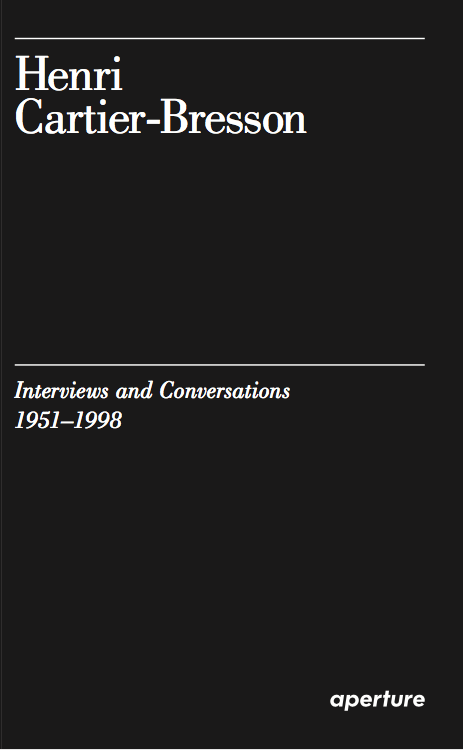
I wonder if Henri Cartier-Bresson might be the most interviewed of all photographers. Aperture assembled twelve notable interviews with the master in Henri Cartier-Bresson: Interviews and Conversations 1951-1998 (Aperture, 2017).
One thing I've found common among the masters is a sense of spiritual or transcendent nature of photography, which I personally cherish. Cartier-Bresson says:
In one of his letters, Cézanne says: 'When I paint and I start thinking, everything gets messed up.' Nowadays, artists look less and think more. The result is academicism calling itself avant-garde. You have to fully live in the instant, it is the only way to be present in the work you do—which explains my passion for the Leica. It is a camera that favors the instant. Reflex cameras on the other hand are noisy, they create a disturbance, that changes everything...
Lessons of the master.
I'm not sure why Walker Evans: The Interview (Eakins Press Foundation, 2019) has the The in it, because Evans surely gave other interviews, but this one was commissioned as part of a large retrospective of his works at MoMA in 1975.
But millions of people feel they're performing an instinctual act when they take a snapshot. What distinguishes what they do from a photograph of yours?
I don't know. It's logical to say that what I do is an act of faith...I think what I am doing is valid and worth doing, and I use the word transcendent. That's very pretentious, but if I'm satisfied that something transcendent shows in a photograph I've done, that's it. It's there, I've done it. Without being able to explain, I know it absolutely, that it happens sometimes, and I know by the way I feel in the action that it goes like magic—this is it. It's as though there's a wonderful secret in a certain place and I can capture it. Only I can do it at this moment, only this moment and only me. That's a hell of a thing to believe, but I believe it or I couldn't act...
Lastly, a couple of Youtube channels that often interview photographers, Eyeshot Photos and The Crit House, which has a neat focus, having photographers talk about three images that meant something to them:
As always, my sources are never meant to be complete, but just what I've found and enjoyed. I sometimes come across older books that are no longer in print and often get them through www.thriftbooks.com online or The Strand in NYC. That said, there are enough interviews listed here to keep us busy for a long time, but I imagine there are many more. Reach out (Threads) or comment if you have others to suggest.
Books Mentioned
Books are linked to the author or publisher, when available, or otherwise used-bookstore or the Internet Archive
Conversations with Contemporary Photographers

 Sally Mann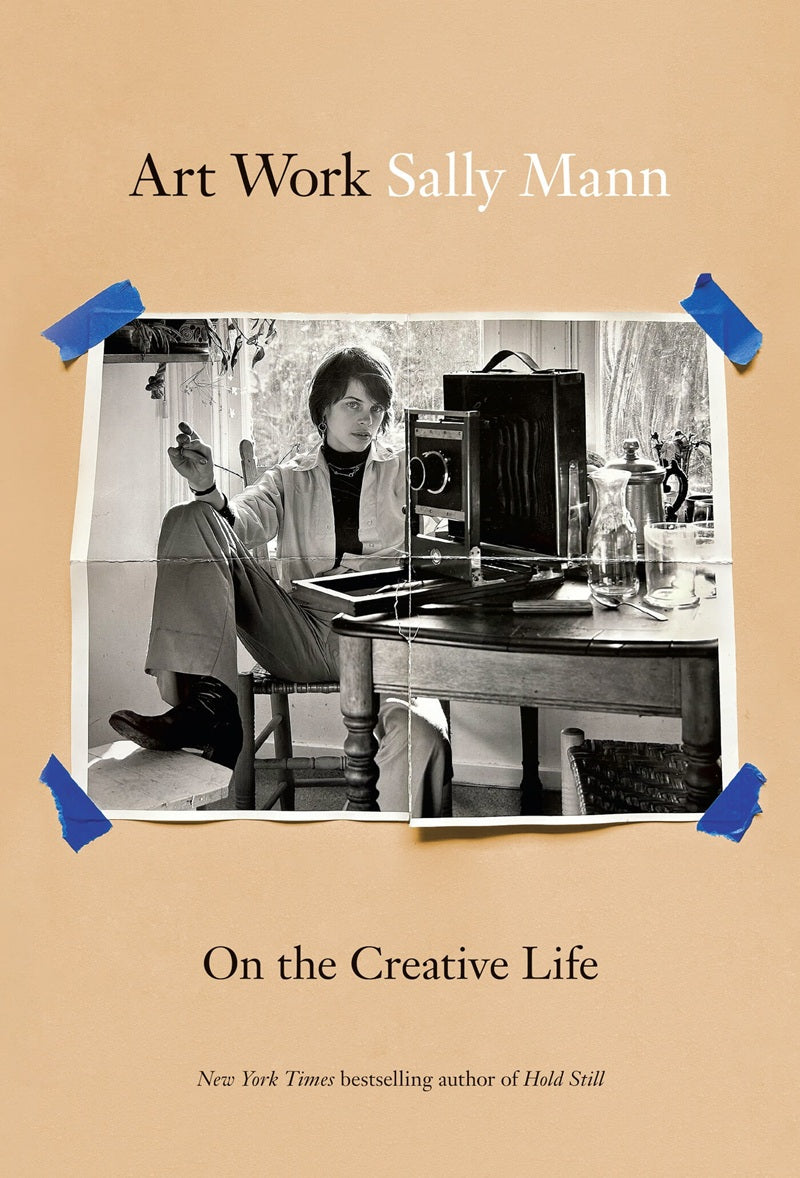


 Larson Associates