Courses & Workshops
[Fall 2026 Update]
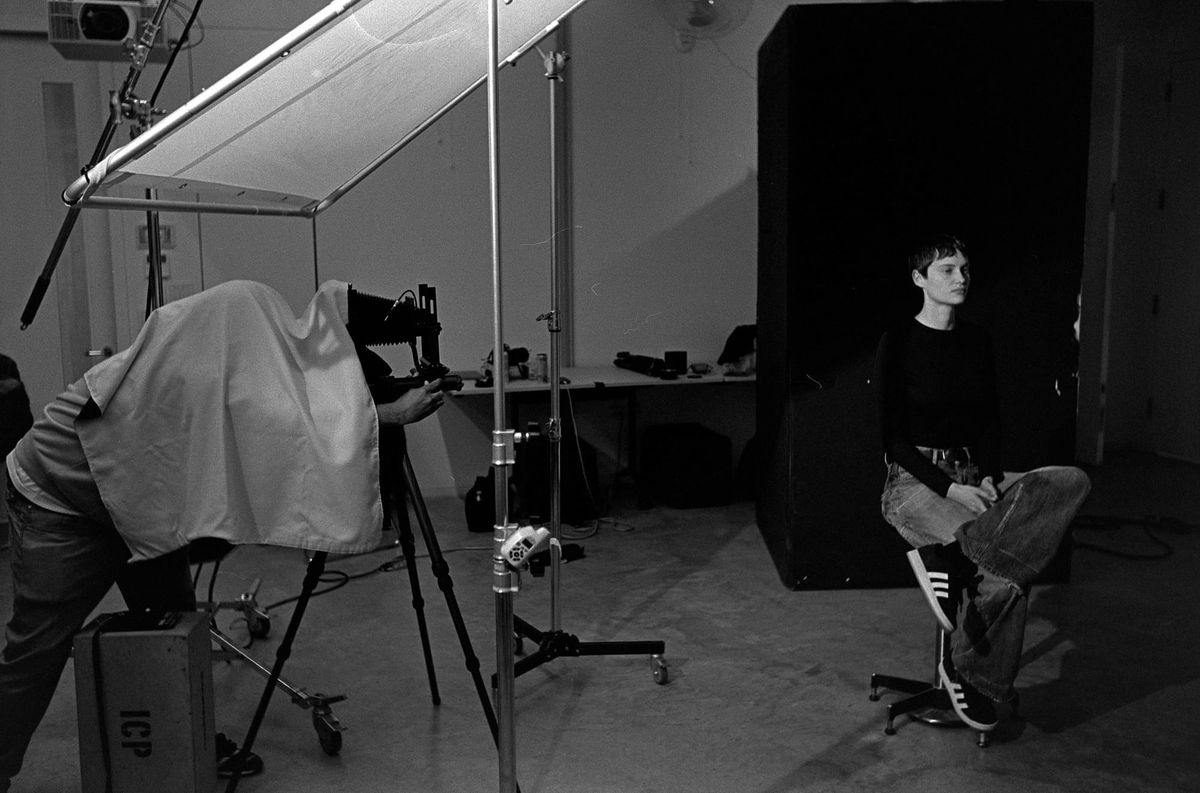
My curriculum has been a combination of:
- Daily practice (photographing/editing/printing+darkroom)
- Reading and study (particularly spending time with photobooks)
- Attending exhibits and talks, and finally
- Course work
I’ve found attending classes invaluable, not always for the content of the class, but for the discipline and interactions they’ve prompted. I find them invigorating and they really take me out of my comfort zone. I’ve found that I’ve developed a great more confidence than if I stopped at daily practice alone. I've also come to realize that, as opposed to an actual MFA, this sort of learning is ongoing.
Here's a list of past and upcoming courses:
International Center for Photography
Large Format Photography: An introduction to the Technical and Practical
Taught by Jon Henry
This course introduces students to large-format photography, specifically what’s involved in using a 4x5 camera. Participants learn core technical aspects of the device and how it differs from medium-format, 35mm, and digital cameras as they make images with the 4x5 camera incorporating both natural light and strobe. Through in-class photo assignments and weekly solo and group challenges, this course aims to expose students to a slower method of working that will help shape their photographic eye and improve the images they make with any camera. This course is limited to 12 students.
March, 2026
The Photo-Poetic Project (Online)
Taught by Janelle Lynch
Photography, like poetry, speaks to our hearts as well as our minds. Yet while it can be precise and detailed, it is not the language of mere fact; instead, it communicates the unsayable complexity of the human experience. In this seminar, students explore metaphor imbued with poetic and evocative personal significance that also resonates with larger cultural or historical meaning. In-class exercises, short readings, and weekly critiques guide participants toward realizing a cohesive project. This course is limited to 12 students.
January, 2026
ICP Crit Lab: With D'Angelo Lovell Williams
Taught by D’Angelo Lovell Williams
Grow Your Portfolio. Elevate Your Practice. ICP’s version of a masterclass, the Crit Lab is designed to take your photography to the next level. Come work with leading photographers and educators to refine your vision, strengthen your portfolio, and develop your unique voice as an imagemaker. Open to all genres and working methods, this Crit Lab is led by D’Angelo Lovell Williams, an acclaimed photographer whose intimate and vulnerable images explore Blackness, queerness, family, and desire. Williams has exhibited at the Leslie-Lohman Museum and Higher Pictures Generation, and their work is included in the collections of The Art Institute of Chicago, Los Angeles County Museum of Art, The Lumber Room, Portland, Memphis Brooks Museum, The Studio Museum in Harlem, Tate Modern, and The Whitney Museum of American Art. Whether you bring in-progress work or start something new, you’ll leave this class with a stronger portfolio and a clearer artistic direction.
November, 2025
Read some of my thoughts on Crit Lab.
Concerning the Spiritual in Photography (Online)
Taught by Bryan Whitney
Henri Cartier-Bresson observed, "To take photographs means… putting one's head, one's eye, and one's heart on the same axis." In essence, aligning one's thought, perception, and love into the act of creating images. This class addresses spirituality in the context of creativity - and how to cultivate it in our work. We examine influential writings about art and spirituality from Kandinsky to Minor White, as well as the observations of mystics and poets. Students will create work for the class that integrates these ideas with their own insights. This course is limited to 12 students.
September, 2025
Digital Negatives and Platinum-Palladium Printing
Taught by Tricia Rosenkilde
Collectors and artists alike value platinum-palladium prints for their beauty and archival permanence. Combining the best of traditional analog printing practices and modern inkjet negative technology, students in this course explore the fundamentals of creating large-format negatives from either digital files or film. They also learn how to produce handcrafted darkroom prints. (Print size is limited to 8x10 inches.) Participants complete the class with enough knowledge to continue working successfully on their own. This course is limited to 12 students. June, 2024
The Contemporary Black-and-White Film Portrait
Taught by Ken Collins
This course explores the timeless art of black-and-white analogue film portraiture. From early photography to modern-day practitioners, such as Dawoud Bey, Sally Mann, and Daido Moriyama, analog photography offers a unique opportunity for both subject and photographer to engage in a slower and more deliberate collaboration. Students explore the traditions and techniques of black-and-white film portraiture, working with natural and artificial light both in studio and on location. They also receive technical instruction on various film types, ISO, and proper metering for exposure. Bring your analog camera, samples of your portrait work, and examples of portrait photographs that inspire you.
April, 2024
Penumbra Foundation
Workshop: Seven Secrets to Photobook Success
Taught by Miwa Susuda
Do you want to learn what it takes to successfully create and publish a photobook? Not sure where to start? This one-day workshop covers all aspects of photobook-making: from being mentally and financially prepared, to the techniques used for editing, production, marketing, and distribution. Students will be encouraged to share their projects (via slides or dummies), and will be provided with helpful lists of industry resources to help make their book a reality and ensure it gets seen through art fairs, photobook contests, and more. Whether you’re a beginner or a professional, a photographer or a publisher, this class will provide an engaging and informative educational experience and a friendly introduction to the photobook community.
March, 2026
The Book: As an Object & As an Idea
Taught by Victor Sira
This course explores the forms and functions of books across various disciplines in modern and contemporary art, emphasizing the connection between an artist’s book and the creative process. Books—whether as narrative constructions, theoretical explorations, or aesthetic objects—have expanded the boundaries of artistic expression across diverse media, often driving innovation within traditional artistic practices. Through lectures, discussions, and projects drawing from student archives, this course provides historical context, a working knowledge of InDesign, and an understanding of layout and typography principles. Students will begin to conceptualize, design, edit, and construct their own books while defining and differentiating various book concepts, including Artist Books, Bookworks, Photobooks, Zines, Book Dummies, and more.
The course offers a comprehensive overview of the book’s evolution as both a conceptual idea and a tangible object. Penumbra's global collection of over 300 Risograph publications serves as a primary source of study and inspiration, showcasing creative diversity and the medium’s relationship between labor and materials across cultural contexts. Students will also analyze how production resources, as well as socioeconomic and political factors, influence the artistic process, resulting in innovative art objects.
September, 2026
Double-sided Inkjet Printing for Book Projects
Taught by Charlie Weber
This hands-on exploratory workshop introduces students to the creative possibilities of inkjet printing, focusing on selecting the right paper for a book or zine project. Participants will begin by reviewing sample books and discussing the advantages and limitations of inkjet printing for bound works.
Each student will receive a curated selection of five thin, double-sided photo papers ideal for the book form. During a guided printing session, the instructor will cover essential practices—file preparation, color management, ICC profiles, and paper grain direction—before students print test images on each substrate. Through direct comparison, participants will learn how paper choice affects color rendition, contrast, and mood.
The class will conclude with an informal critique focused on how material decisions shape visual experience, followed by a simple binding exercise using cover stock and staples. Students will leave with printed spreads and a tactile understanding of how their images function in book form.
December, 2026
Magnum Online Workshops
Mark Power: Picturing Place
Welcome to your new online course by British photographer Mark Power, shot partly in his studio in Brighton, and partly across the Atlantic on the road in Alaska. During 6 hours of video content and 11 workbooks, Power sets out to share a comprehensive and pragmatic guide to his creative practice, how it has evolved over his forty years as a professional photographer, and how to build a sustainable career as a photographer whilst juggling the realities and responsibilities of everyday life.
Through in-depth analysis of several key projects, such as The Shipping Forecast, The Sound of Two Songs, and Good Morning, America, Power sheds light on how to approach unfamiliar places for your projects, and how to use naivety to your advantage when capturing new places. He also discusses approaches to finding commercial or advertising projects to help fund your personal work.
Link
Matt Black: The Documentary Commitment
Across 21 in-depth lessons spanning more than five hours, photographer Matt Black imparts the vital lessons and advice he has learned across his career. Sharing his pathway into photography, unpacking his major projects, and sharing his key guiding principles needed to be a photographer making meaningful work, often on difficult subjects, this course aims to guide you in forging a connection with a subject, theme or idea that can propel your photography forward.
Link
Stephen Shore Masterclass
From May 12 to 16, 2025
Jeu De Paume – Paris
What is a photograph and how do we perceive it? This series of four lectures will explore the formal attributes of a photograph – how the world is translated, transformed into a photograph. They will explore the formal tools of that transformation and how those tools implement and require the imposition of structure. Finally, the lectures will describe the cognitive understanding of the image. This series begins with what a photograph is physical and formally and ends with how we ultimately receive the image
Lecture 1: The Nature of Photographs.
“A photograph is not what was photographed. It’s something else.” (Winogrand).
Lecture 2: Form and pressure
Photography as an analytic medium: The relationship of form to content.
Lecture 3: Attention
Experiencing the world: Paying attention to the mundane.
Lecture 4: The Mental Level.
The level on which we ultimately experience a photograph.
See Shore's Modern Instances: The Craft of Photography, and The Nature of Photographs
Janelle Lynch Workshops
Creating Beyond Convention I with Alex Yudzon
Instructor: Alex Yudzon
Your creativity is central to who we are. It is not only an expression of our individuality, it is also the way we vitalize our essence and grow our connection to the world. Since life is not static, our creativity must likewise stay in a dynamic state of emergence.
At times, however, we might find ourselves working in rigid, programmatic ways. Using a clear and relatable approach, Creating Beyond Convention, is designed to give each participant a practical set of tools to either enliven the path they are already on or to launch off in an exciting new direction.
Participants will be introduced to a variety of contemporary artists, photographers, writers, filmmakers and musicians in order to examine the ideas, methods and strategies they use to advance their work in unconventional directions. The goal of this workshop is to develop out-of-the-box creative approaches that act as powerful accelerators in both art and life.
Each week will focus on a specific approach and will include a slide presentation, a guided assignment, a group discussion and review of participants’ work.
Course Structure:
1. Breaking the Rules (an introduction to the Trickster): John Baldessari, Beat Takeshi, Georges Perec: Identifying and breaking conventions as a form of play.
2. Chance Encounters: Philip-Lorca diCorcia, John Cage, Sophie Calle, using elements of chance, spontaneity and improvisation in creating work.
3. Variations on a Theme: Claude Monet, Ed Ruche, Sol Lewitt, examining the way working in groups and sequences can generate ideas that are greater than the sum of their parts.
4. Side Project as Personal Sandbox: David Lynch, Gabriel Orozco: developing the practice of a side project as a creative tool that is both an end in itself and a powerful method for artistic growth.
Context & Critique: A History of Photography through Genre with Elliot Krasnopoler
Instructor: Elliot Krasnopoler
Across four sessions, we will explore the history of photography through its four predominant genres: Landscape, Documentary, Portraiture, and Still Life. Distinct genres emerged as a way of categorizing and analyzing painting, and early photography responds to this history. But photographers quickly embrace their unique medium and begin charting their own paths and traditions. By introducing canonical works in the history of photography, this workshop will explore the evolution, limits, and possibilities inherent in each of these genres.
In addition to studying the context of important moments in the history of photography, participants will also learn to analyze photographs and glean information from the image itself. By focusing on the limitations each genre naturally imposes, we will explore how artists engage with and push against constraints. Finally, students will explore these genres for themselves by bringing in images we will analyze and discuss together.
Classes will include lectures on the history of photography, discussions and group analyses of images, as well as constructive feedback on student-made images. Students will come away with a broader understanding of the history of photography and a deeper appreciation of how photographic traditions can inform, challenge, and expand their own ways of seeing and making images.
January 13 — Landscape. Some of the earliest photographs were landscapes, and this genre still dominates much of how we relate to the world photographically. We will look at Carleton Watkins, Edward Weston, and Richard Misrach, among others.
January 20 — Documentary. A genre unique to photography thanks to the medium’s evidentiary promise. We will look at Henry Fox Talbot, Walker Evans, and Sebastião Salgado, among others.
January 27 — Portraiture. How do we capture each other in pictures? How does the camera change how we fashion ourselves? We will look at Julia Margaret Cameron, Richard Avedon, and Sally Mann, among others.
February 3 — Still Life. Sometimes viewed as the lowliest genre, photographers have used still life to explore materiality, consumerism, modernism, and nature. We will look at Imogen Cunningham, Irving Penn, and Josef Sudek, among others.
Nick Carver Photography
Mastering Manual Metering for Film
Instructor: Nick Carver
In this online course for Mastering Manual Metering for Film Photography, you’ll learn “The Precision Method for Manual Metering” - my simple step-by-step process for getting the perfect exposure on the first frame. Through classroom instruction coupled with in-the-field live demonstrations, you’ll see how to apply this method using a Pentax Digital Spotmeter or Spotmeter V, any variety of Sekonic Spotmeter, the Reveni Labs Spot Meter, and just about any in-camera light meter. So regardless of what light meter you have or what camera you’re using, you’ll learn how to master manual exposure. From "The Precision Method" to alternative methods for manual metering, this course covers it all. Bracketing, reciprocity failure, dynamic range, light meter modes, metering with filters, pushing and pulling film - it’s all here.
Printing and Color Management
Instructor: Nick Carver
Seeing your photos on paper is a sensation unlike any other. It's gratifying, it'll fill you with pride, and it's what your photos deserve! I want you to experience that feeling, which is why I've been preaching the message on my YouTube channel for so many years: print your work!
Now I want to give you the tools to make your own gallery-quality prints. From inkjet printing to lab printing, from ICC profiles to monitor calibration, from soft proofing to image sharpening, this course will teach you everything you need to know to get fantastic digital prints including, of course, from film scans.